

After The Eye Exam
After the eye exam Stephen will lead you out into the reception area and hand you over to the dispensing team with a verbal update discussing next steps.
On occasion Stephen will have recommended you be referred to a provider for investigation of an eyecare condition.
Alternatively you may have been issued with a new prescription which could mean you need new lenses, or you may need to choose a pair for the first time! It is recommended that adults should have their eyes tested every two years, and children every year, depending on your eye health the optician may recommend a yearly check. If your prescription has remained stable over time, there is no need for new glasses… unless you want a new frame!
Should the recommendation be that you upgrade your lenses Stephen will have recommended the type of lens suitable for your vision needs, be it varifocal, bifocal, single vision or a more nuanced lens (more on the different types of lenses below!).
Then comes the fun part, our dispensing opticians will have a detailed conversation with you about the different kinds of lenses, your lifestyle and your work requirements to ensure you are choosing the perfect lens and frame for your lifestyle. You will have the opportunity to try on any number of frames from our extensive range of quality frames, from budget to the very best top end frames!
The dispensing process at Woodhouse Opticians is detailed and nuanced, we don’t put any old lens into a random frame, instead we carefully take into account facial characteristics, colour pallet, lifestyle, hobbies, the likes and dislikes of our patients are of paramount importance and we will spend as long as necessary helping you choose your perfect frame, it’s not uncommon for a patient to try on tens of frames until they find their perfect one.
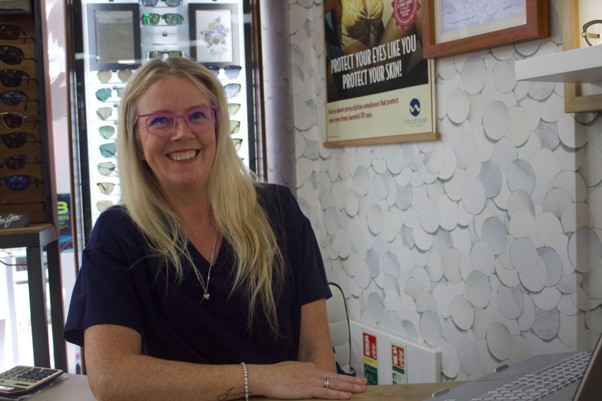
Once the frame choice has been made the DO will discuss lens requirements, within this we look closely at your prescription and based on this walk you through the detailed range of the thickness and quality of lens, the lens coating, and the lens finish. Once decided upon the dispenser will take a variety of measurements using both sophisticated technology and hand measurements, enabling us to create a bespoke lens for each patient. Finally the dispensing opticians will trace the frame, creating an accurate shape that is then electronically transmitted to our lens manufacturers, within a few minutes of this trace being transmitted, the lens is in production!

Generally speaking your lenses will be ready in a week to ten days, at which point we will check them and send you a brief text or phone call to arrange an appointment to fit the glasses or to put your new lenses in an existing frame. We are always happy to put new lenses in an old frame but we will advise if we think the frame is past its best!
After you have collected your glasses we warmly encourage patients to get the feel for their glasses and give us a call or pop in if we need to adjust the glasses.
Different Lens Types
Varifocals
Varifocals allow a person to blend their differing prescriptions, allowing the wearer to see at any distance. With a varifocal you put your glasses on in the morning and don’t need to take them off till you go to sleep in the evening as there is no need to switch your glasses to fit different prescriptions, allowing you to see with your best vision all day long.
Bifocals
Bifocals are similar to varifocals in the way that they allow you to have multiple prescriptions in one pair of glasses, however instead of the borders between distance and reading blending into one another, there is a distinct line that separates distance and reading present on the lens.
Single Vision
Single vision lenses are more simple, with only one prescription present in the lens be it distance or reading.